The heavy equipment job site vs. the pit lane

2026.1.27
Atlassian Williams Racing

The heavy equipment job site vs. the pit lane


Behind every high-performance machine is a team making it happen.

At first glance, a race car, a mining truck the size of a building, and a tree-harvesting forester might seem worlds apart. But look closer, and you'll find a shared reality: each relies on a team of skilled professionals working behind the scenes to keep complex machines performing under pressure. From rapid part swaps to precision servicing, maintenance is where reliability begins — whether you're in the pit lane or on a remote job site.

In each case, the machine is expected to operate at the highest levels for extended periods in incredibly demanding and very different conditions.

What does it take to deliver consistent performance day after day, race after race, shift after shift? With both Atlassian Williams F1 Team and Komatsu, the answer is the same: precise planning, disciplined processes and teams that perform under pressure. We spoke with maintenance professionals from both worlds to explore striking similarities in how they keep complex machines running at their best.


Planning

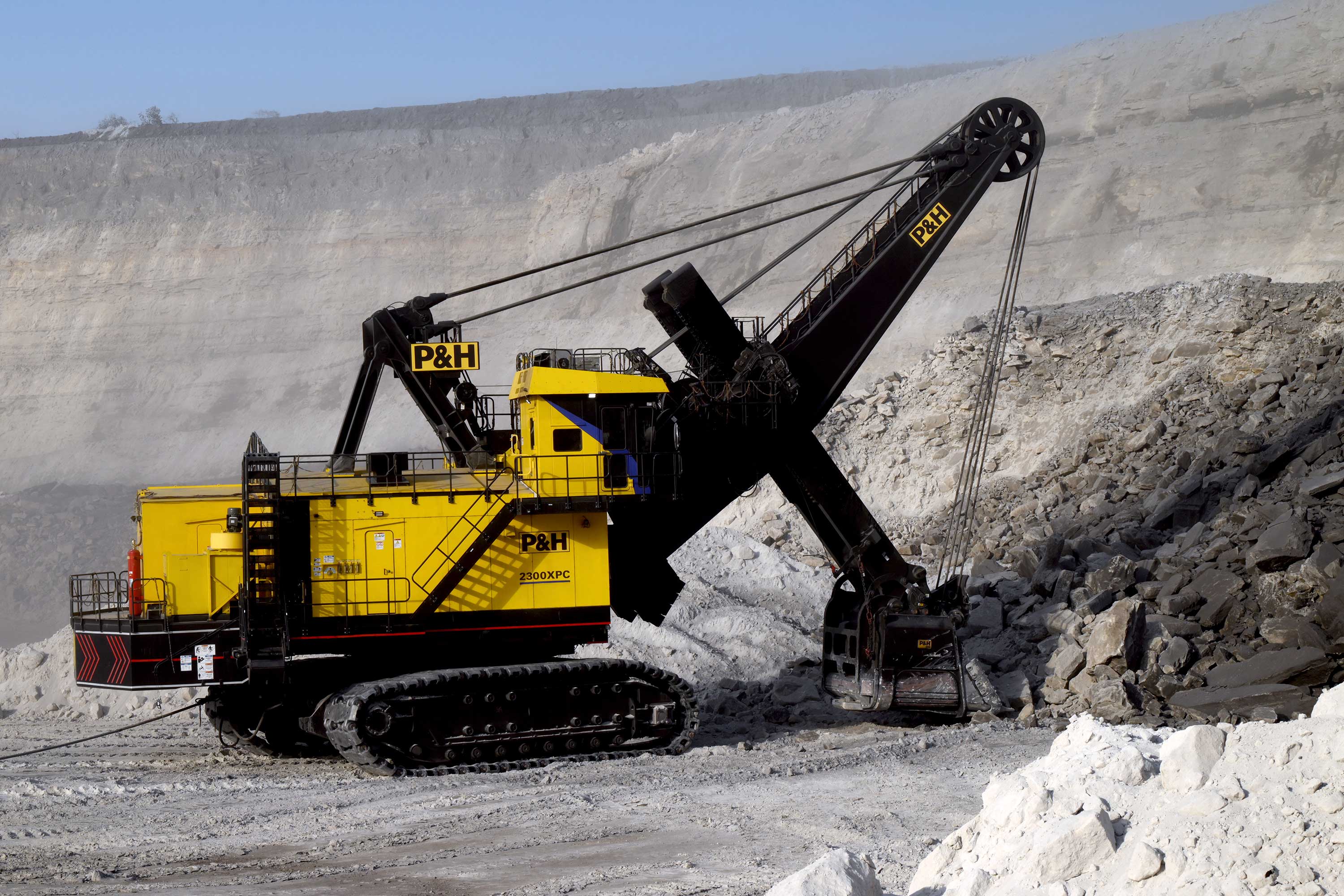
At Komatsu job sites, replacing a major component like the dipper — the massive steel bucket at the front of a 2300XPC electric rope shovel, large enough to hold dozens of tons of material — requires a complex choreography of tools, trucks, cranes and technicians. “It takes three shifts and two mechanics, and that’s if you’ve done all the planning right,” says Dan Harvey, Senior Manager, Product Support, Loading. “You’re hauling out the old part, bringing in the new one, and everything has to arrive in the right order.”

Every component on the 2300XPC, like the dipper, has a scheduled lifecycle built into Komatsu’s maintenance planning.
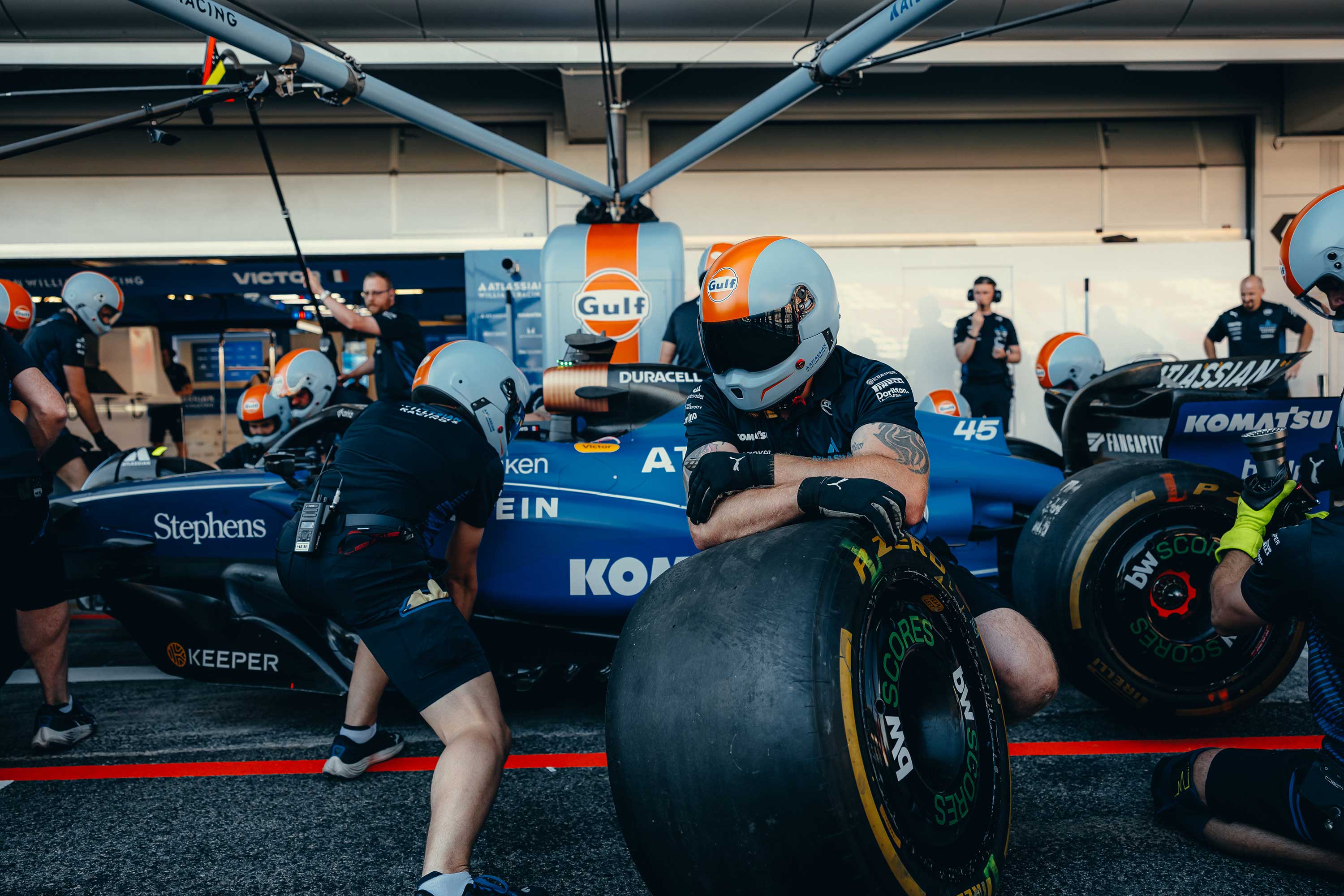
Similarly, managing Formula One freight is no small task. With upwards of 1,000 tons of equipment being sent across the season, and different elements of the paddock being shipped out at different times via the air, seas and roads, advanced planning is a key part of the racing world. For flyaway races, certain parts of the paddock are kept out in the relevant region — such as office furniture — to reduce carbon emissions and increase efficiency. All car-related parts are sent to the races as priority palettes via air, with no team allowed to start building their cars until everyone’s palettes arrive, for the sake of fairness.
As Emma Bilsby, Williams Lead Spares Coordinator, tells us, “For a parts turnaround week, it’s still very busy even though we’re not racing. All the freight comes back from a race and we transition from air freight to our trucks for the next race. Some of the first things that will go back out will be garage equipment for the set-up crew so it can be turned around quickly.
“In total there are thousands of parts; 500 or so will go through the factory to go out again. Certain parts need to be serviced because they’ve run out of milage, and we’ll repair any broken parts. Turnaround week involves a lot of departments. We start with an area where we sort out all the parts, which then get pushed out to different areas like component assembly, car assembly, and composite production testing to get everything ready. If we don’t manage to get all the parts out, then we can’t build two chassis and have enough spare parts if there are any crashes throughout the weekend. And if that happens, that means we’ve not done our job properly and the cars will stop. So, there’s a lot of pressure.”

In both worlds, precision on the ground starts with preparation behind the scenes.

Precision under pressure: the choreography of a sub-two-second tire change.
Processes

When the tools are ready and the team is in place, what matters most is how the work gets done. In both elite motorsport and heavy equipment maintenance, strong processes are what turn complexity into consistency. They make it possible to perform quickly, safely and under pressure — whether it's a pit crew changing tires in seconds or a Komatsu team rebuilding critical components in the field.

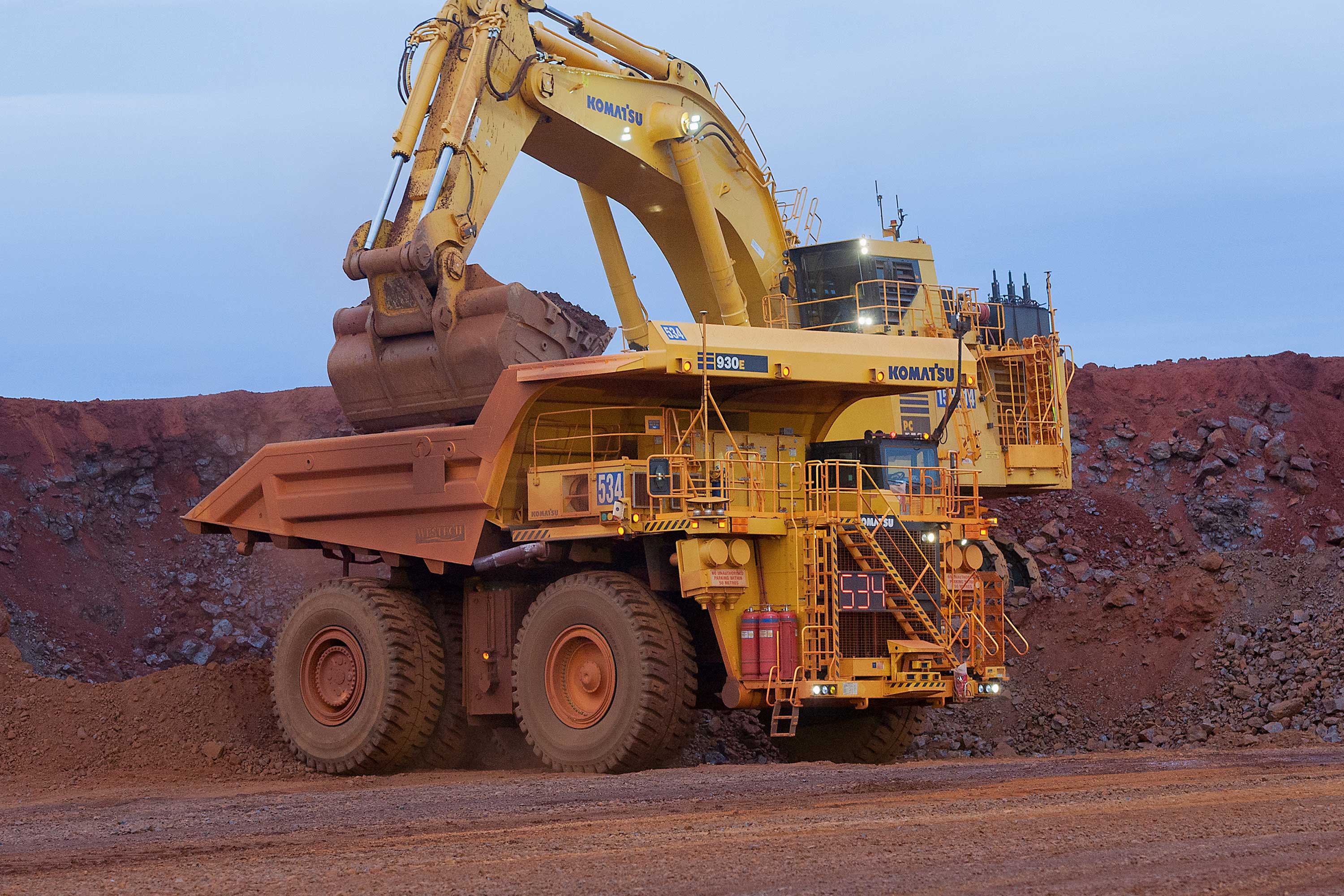
While Komatsu wheel changes take longer than a pit stop’s two seconds, that doesn’t mean the team isn’t under pressure to work quickly. Michele Mella, Regional Service Manager, European Support, Mark DB, notes, “On our job sites, it’s a choreography of precision, where tools and people work as one, with safety as the top priority. When a machine stops, productivity stops. We work hard to make sure the processes are tight. Technicians strive to diagnose, repair and return equipment to full power as quickly, safely and efficiently as possible.”

David Haukeness, Chief Solutions Architect, Engineering, with Komatsu adds another commonality he sees: how seemingly miniscule time gains add up. “Small gains in timing become really big, especially when you talk about haul trucks. Take for example what we refer to as a ‘cycle.’ The truck leaves the shovel, gets the material, goes to the crusher, dumps it in the crusher and then goes back to the shovel — that's one cycle. Alot of people don't realize, if you can shave even a couple of seconds off a cycle time, that adds up per truck in the mine, per hour, 365 days a year.

Haukeness emphasizes, “All of a sudden, those really small gains turn into really big gains for our customers. We're constantly tuning systems for optimal performance, time after time, each time, over time.”

Repetition reveals the edge. Over thousands of cycles, every second saved adds up to something big.
People

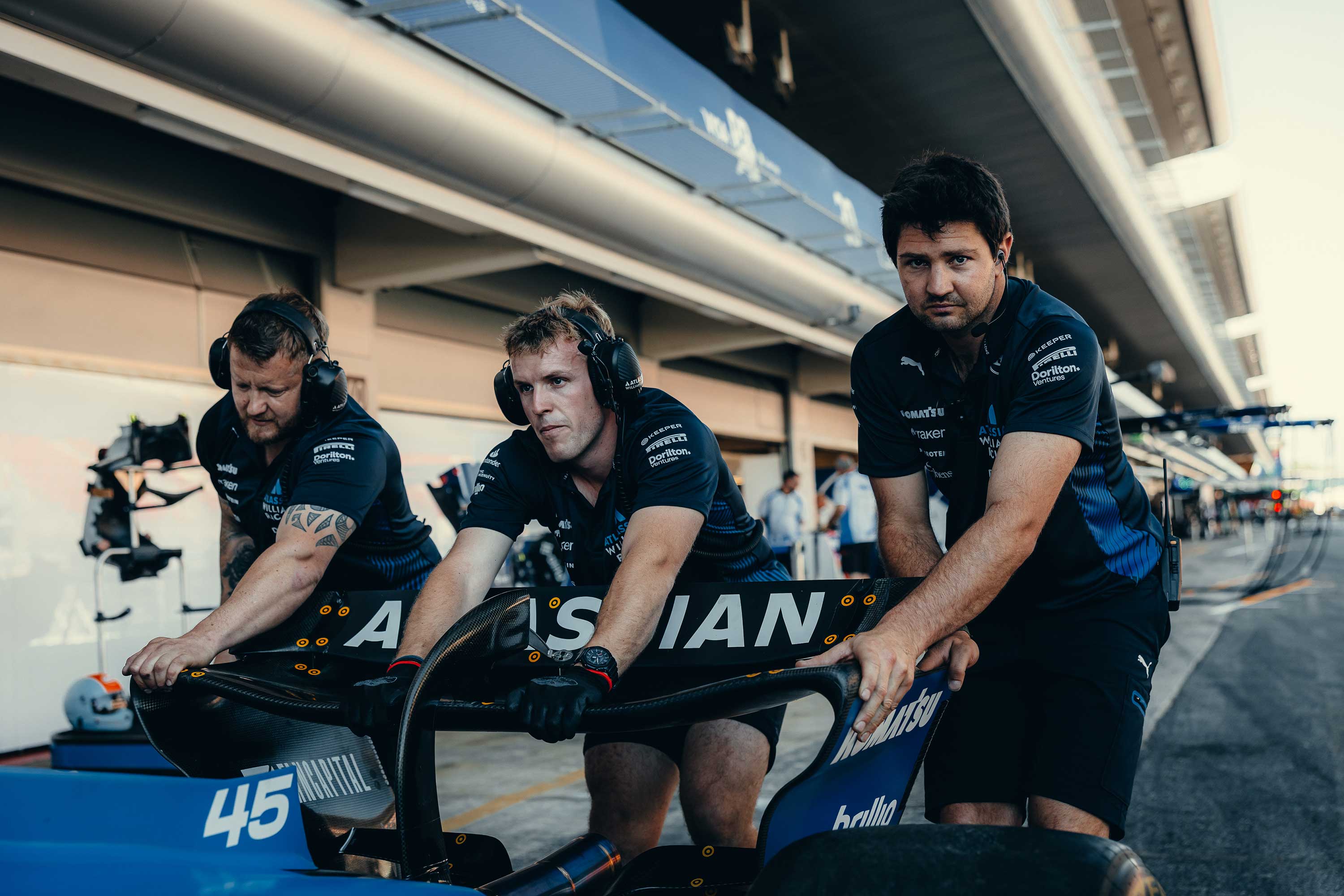
Behind every great performance — on the job site or on the track — is a team of people who make it possible. At Komatsu and Atlassian Williams F1 Team, world-class machines depend on quiet moments of judgment, collaboration and relentless training. These teams may operate in different environments, but they share the same drive: to solve problems, stay ready and perform when it counts.

Speaking at his visit to the Komatsu UK facility in County Durham, England, Williams’ Peter Kenyon elaborated on the importance of people within an organization. “I think we’re all in the business of wanting the best individuals. We want the best talent in the world from wherever they come from and whatever they do, we want them to work for us.

He adds, “But if they’re the best talent and can’t work in a team, they’re the wrong talent. Teamwork always overshadows the individuals, because it’s teams that make the difference, and I think time and time again through our experiences we know that. The best teams win, not always the best individuals.”

Great teams learn from each other and never stop sharpening their skills. That’s the idea behind Day in the Life: giving Komatsu technicians a hands-on look at elite motorsport teamwork in action prior to a race.

Harvey agrees: “It's really attitude, competencies and communication. We deal with highly technical situations, so we need people who can dissect and evaluate issues, but also communicate clearly, with both operators and engineers.”

Haukeness sees a lot of similarities as well. “We're looking for a lot of same qualities that an elite motorsport team does. We both have data scientists, we've got engineers, we've got maintenance people. All of those people are constantly working together to make sure all the data is tracked and managed in a certain way. Of course our tolerances vary because our trucks aren't going 300 kilometers per hour (186 mph). But a lot of the principles are the same.”

Mella adds that in both cases, preparation and training are vital: “For F1, mechanics train relentlessly. Every pit stop is practiced hundreds of times to achieve consistency and speed. For Komatsu, service technicians undergo continuous training on new technologies, digital diagnostics and hydraulic systems. Their expertise evolves with every new generation of machines.”

Built to learn from one another

At both Komatsu and Atlassian Williams F1 Team, high performance starts with people, not just doing their jobs, but growing in them. From engineers and mechanics to planners and team leads, the most valuable insights often come from outside your own world. That’s what makes this partnership so powerful: two seemingly different industries, learning from each other to build stronger teams and cultures.

“Komatsu and Williams both have a great understanding of company culture,” explains Kenyon.

“When we understood what the reason behind wanting to do this partnership was — which is, ‘we have 67,000 employees, we want to retain more employees, we want to recruit more good people to fill the objectives of the business’ — there are so many commonalities … and culture is one of them.

“We had to build that culture. Komatsu had a culture that they wanted to strengthen. And over the past 18 months, two years, I think we’ve worked really hard together. There are a lot of case studies of Williams using Komatsu and vice versa — and I think that’s about the core authenticity of this relationship.”


Latest articles

Performance starts here: Inside Komatsu Thailand
Driving success together: Peter Kenyon ignites Komatsu UK with insights from the fast lane
Why the machines went blue