Chief Technical Officer
Pat Fry
Atlassian Williams F1 Team
Pat Fry has held senior engineering positions in numerous prestigious teams where he has contributed to Grand Prix victories and Constructors' and Drivers' Championships. Currently his extensive experience and technical expertise is leading Atlassian Williams F1 Team technical development.
Pat eloquently summed up the technical challenges for the team, explaining how rising environmental concerns have resulted in continuous changes in F1 regulations in recent years.
Since the 2014, the biggest revision of technical regulations was introduced in 2026. The changes significantly increased the proportion of electric power, and impacted the very design philosophy of hybrid systems. Under the new regulations, the maximum output of the MGU-K (kinetic motor generator unit) electric motor is 350 kW (approx. 470 horsepower), and the power split between electrical and combustion engine output will be 50:50*. From a strategic standpoint, efficiently managing battery charging and output will be a crucial factor in determining the outcome of the race.
*Regulations as of April 2026. F1 regulations are generally set on a season-by-season basis; however, after each race, regulations related to hybrid operation technologies and their interpretations may be updated. This will require teams to constantly adapt and evolve.
During his career spanning numerous teams, Pat witnessed the moment when the introduction of hybrid systems changed the concept of racing. While top speed was once the determining factor in competition, today energy management is the primary focus - when to recover energy and where to discharge stored energy in each lap. Energy management now decides whether we win or lose. In addition, 100% sustainable materials are mandatory, leading to smaller and lighter cars. Battery capacity has its limits, and regenerative energy is not inexhaustible. In addition, conditions vary greatly from circuit to circuit. The challenges are endless.
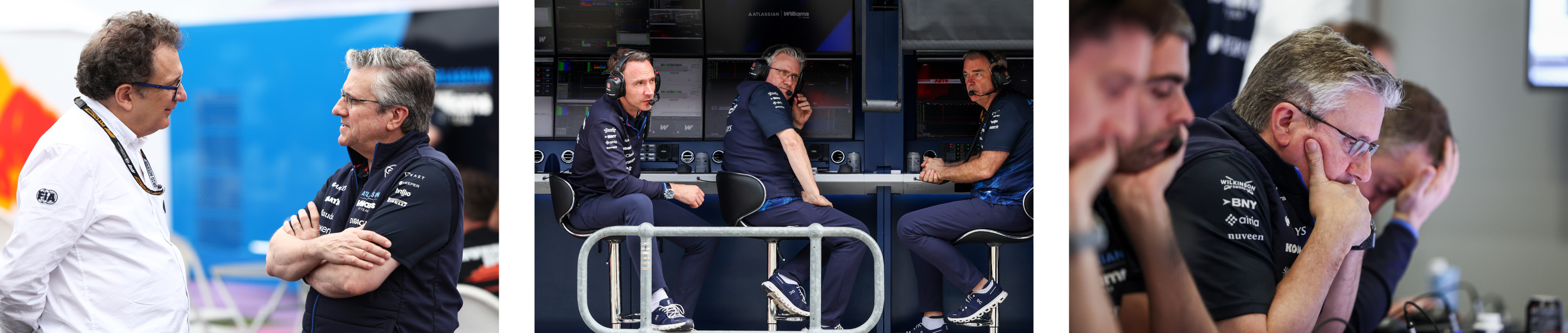
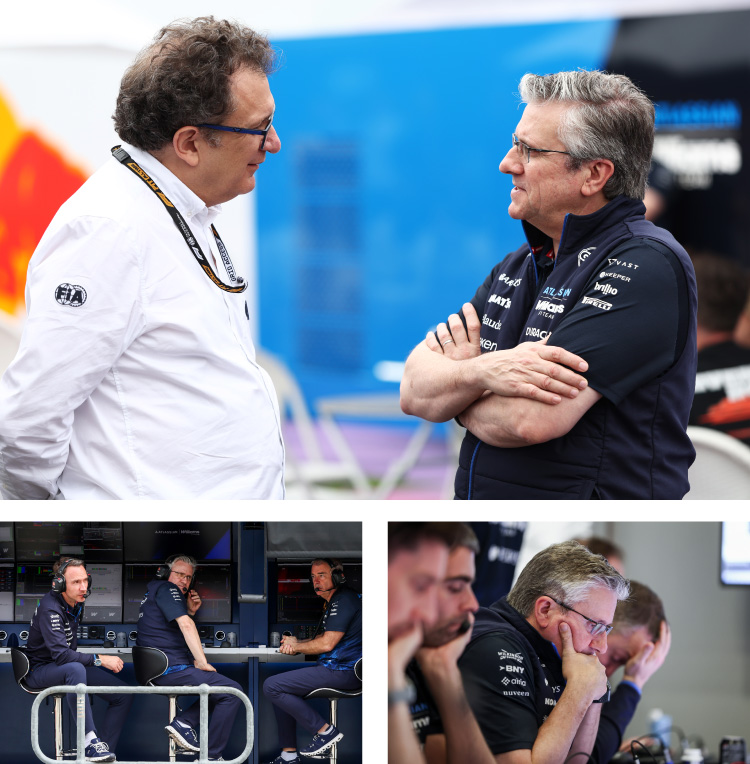
As Pat went deeper into the challenges facing the team, his explanation took a more serious tone. He talked about the countless simulations necessary to find the optimal timing to discharge energy in order to improve lap times. Based on the results, the team formulates pre-race strategies and even makes decisions during the race while monitoring the remaining energy and car performance data in real time. This management of energy recovery and output leads to more strategic racing with a high degree of precision.
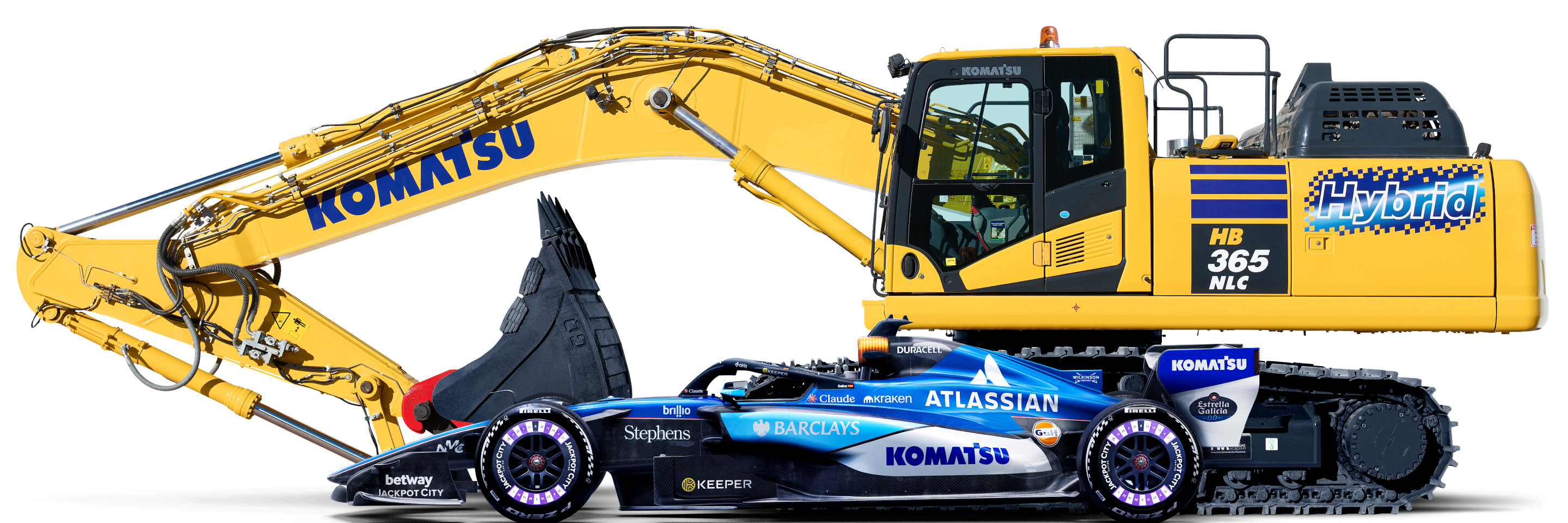
"Motorsports and construction worksite have something important in common. We both highly value data!” explains Pat with growing passion. “In motorsports, we rely on data to hone the technology that determines and optimizes how our race car performs.” He went on to explain how their knowledge is built from the accumulation of simulations and actual measured data. Even if the circuit and construction worksite environments are different, the methods of optimizing methods, thorough data verification, and pursuit of the optimal solution remains the same. It is from his understanding of their shared goal that he has deep interest in Komatsu's approach to energy management.
Finally a message for the coming generation of young engineers:
“First find something you enjoy. In my industry, we must constantly pursue improvement in every area, from design and simulation to manufacturing. I believe that the spirit of inquiry and the willingness to improve through trial and error may be the biggest difference between F1 engineers and engineers in other fields."