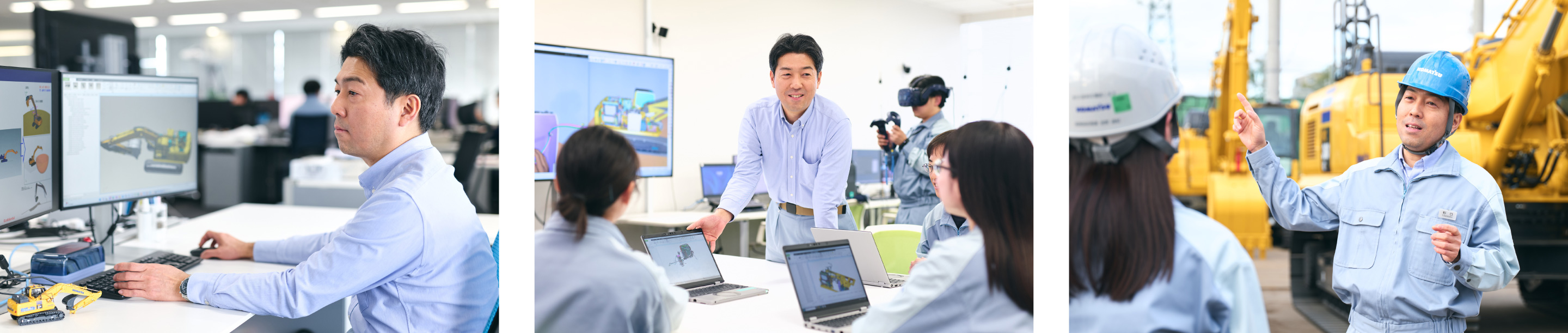
Hybrid Excavator Development Lead
Takashi Sugiguchi
Komatsu
Since 2008 in charge of Komatsu’s hybrid excavators.
This includes involvement in the mass-produced HB365 series from its development.
“Komatsu's pursuit of hybrid technology is driven by the challenges faced on construction sites," explained Takashi Sugiguchi. There are as many challenges as construction sites. 1,000 machines will be used in 1,000 different ways because each does not work under identical conditions. While completion of their tasks swiftly without interruption is essential, today machines must efficiently manage energy, keep fuel costs to a minimum, and balance work performance and environmental performance. Answering these demands is at the core of Komatsu's vision for hybrids.
Originally in charge of structural design such as the frames of the machines, Sugiguchi became involved in the development of Komatsu’s hybrid systems and encountered his first challenge: finding a balance between “minimizing energy and fuel consumption while maintaining high work performance.” Quality verification of actual machines was a continuous cycle of trial and error. The development team was constantly with new issues and fresh challenges to overcome. For example, excessively fast-paced test operations resulted in wasted energy, making it necessary to analyze human-machine interaction, and then reflecting the findings in updated control software. Subsequent trial and error incorporated feedback from actual construction machine operators, further refining the system.
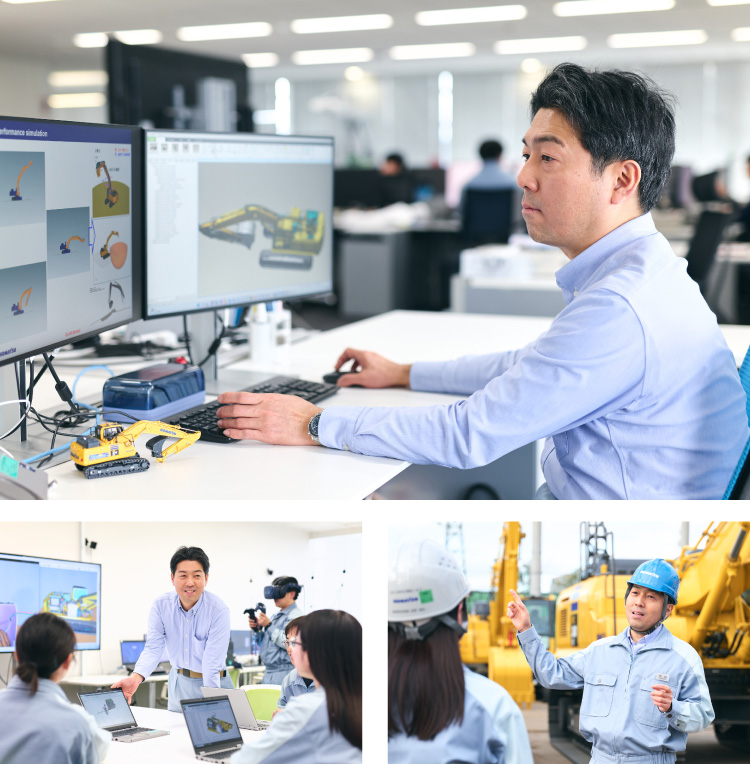
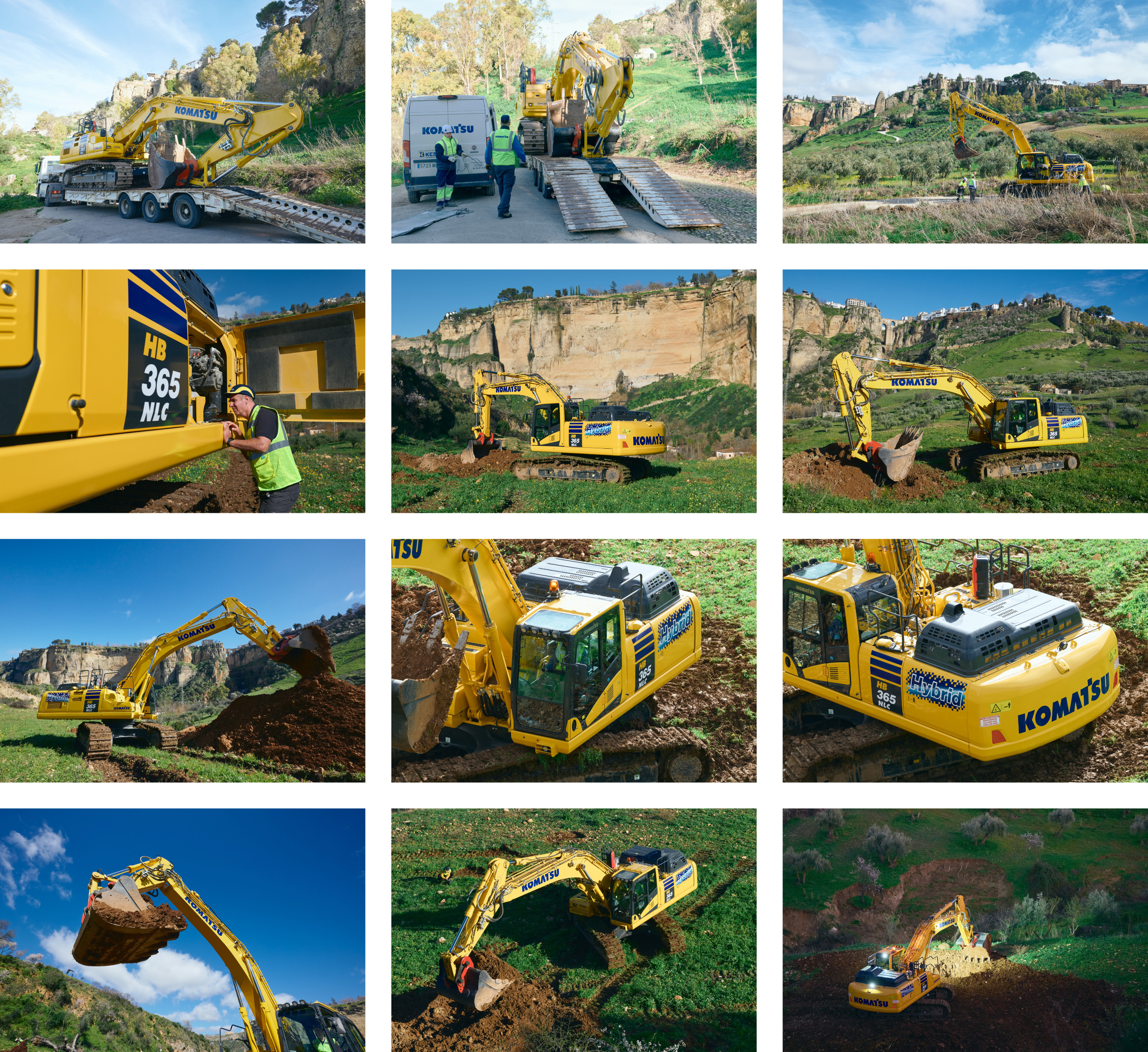
The advantage of hybrid technology is its efficient use of energy. In the case of an excavator, rotation of the upper structure is driven by an electric motor. Kinetic energy generated during deceleration of rotation is recovered and reused for the next rotation, reducing overall energy consumption. Sugiguchi also remarked on another important advantage of their system: the separation of usage of the electric and hydraulic energy sources. While the electric motor powers the rotation of the upper structure, the load of other operations is borne by the hydraulic pump. This independence of functions enables both rotation unaffected by other operations and more efficient use of hydraulic pump power—an advantage not possible with conventional excavators. This advantage was the fruit of repeated testing and data analysis.
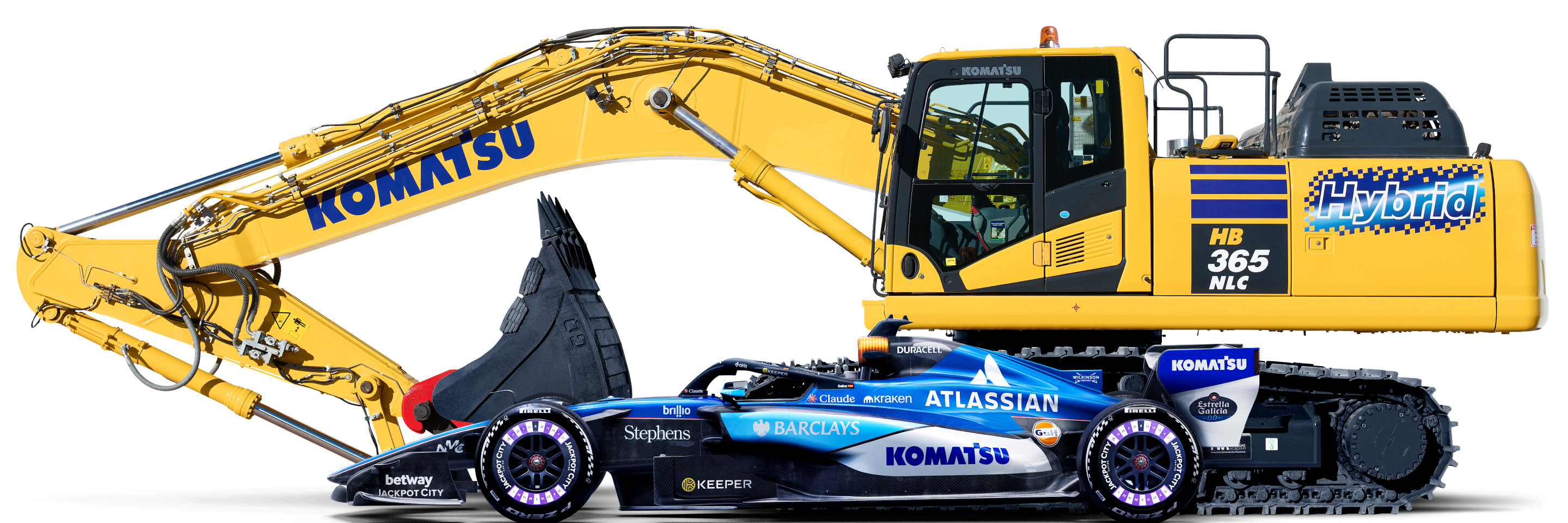
When asked about hybrid systems in motorsports, Sugiguchi became reflective, “Though there are big differences in our respective fields, I also feel a deep connection with my fellow engineers in motorsports.” He observed that motorsports is a world of extremely highly skilled specialists in both management and technology, and at a fundamental level, there is common ground with the development of construction machinery. Also in motorsports, the cycle from one race to the next is very short. He expressed great interest in how this impacted their technicians’ decision-making process: how they analyze and organize driver feedback and designer views, and how they arrive at the optimal solution?
Finally a message for the coming generation of young engineers:
“If you don't try because you haven't done it before, you'll never know the joy of achievement. Even if you fail, you can ask yourself how can I do better. When you’re still young, it’s a time to fail and learn. Don't be timid. Challenge yourself to do what you want to do, to try what you’ve never done before, and to know the joy of achievement. I believe Komatsu provides the environment to support that.”